

The Broom Wagon Guide: How to Master the Mallorca 312 Cut-off Times
Share
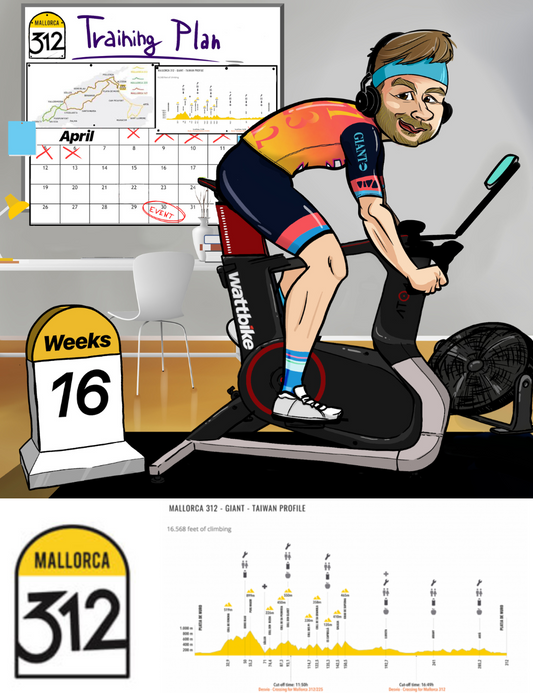
For many, the Mallorca 312 is the pinnacle of the amateur cycling calendar. 312 kilometers, 5,000 meters of climbing, and some of the most breathtaking scenery in the Mediterranean. But behind the beauty of the Serra de Tramuntana lies a cold, mathematical reality: The Broom Wagon.
Every year, hundreds of fit, well-prepared riders are pulled off the course not because they lacked the legs, but because they lacked a plan. At RideHarder, we don’t believe in "just finishing." We believe in tactical mastery.
If you want to avoid the dreaded "Did Not Finish" (DNF) and earn the right to call yourself a 312 finisher, you need to understand the clock as well as you understand your power zones.
The Numbers: Know Your Enemy
The Mallorca 312 is unique. You don't sign up for a specific distance; you start with 8,000 others and decide your fate at the "split points" based on your pace. If you don't reach these points by the designated times, the decision is made for you.
- The Critical Gate: The most important time on your Garmin is 11:15 AM. This is the split at approximately kilometer 97. If you arrive after this time, you are directed toward the 167km route. There is no negotiation.
Why Strong Riders Fail: The Two Silent Killers
We see it every year. Riders with an FTP of 4w/kg sitting on the curb in Lluc because they missed the window. They didn't fail because of fitness; they failed because of friction.
1. The "Feed Station Trap"
The Mallorca 312 feed stations are legendary, but they are also momentum killers. If you spend 15 minutes at each of the six major feed stations, you have just volunteered 90 minutes of your life to the broom wagon.
- The RideHarder Rule: If you aren't filling bottles or grabbing fuel, you are moving. Aim for "Formula 1" style pit stops.
2. Mismanaging the "Big Two" Climbs
The Coll de Femenia and the Puig Major occur early. Many riders, fueled by adrenaline, attack these climbs at Sweet Spot or Threshold. By the time they hit the rolling plateau of the island's center, their glycogen is gone and their Normalized Power (NP) has plummeted.
Note: You don't win the 312 in the mountains, but you can certainly lose it there.
Technical Strategy: Banking Time in the First 30km
To beat the cut-offs, you have to understand the course profile. The first 25km are flat, fast, and frantic. This is where your race is set up.
The Art of the Draft
In the first 30km, your goal is free speed. * Ride the Wave: Position yourself in a fast-moving group. Do not be the hero on the front.
- Heart Rate Management: We coach our athletes to keep their heart rate in Zone 2/Low Zone 3 during this phase, even if the speed is high.
The Buffer
By maintaining a high average speed on the flats into Pollença, you "bank" a time buffer. This allows you to climb the Coll de Femenia at a steady, sustainable endurance pace without the panic of the clock ticking down. If you reach the base of the first climb (km 28) with a 15-minute "profit", you have bought the ability to ride the mountains at your own tempo.
The 160km Reality Check: Avoiding the "Danger Zone"
Passing the 11:15 AM split is a massive milestone, but it is a dangerous psychological trap. There is a common misconception that once you’ve cleared the first cut-off, the "real" climbing is over.
At RideHarder, we call this the ‘Danger Zone.’
The Serra de Tramuntana does not truly release its grip until the 160km mark. Between km 97 and km 160, you face a relentless barrage of punchy climbs and energy-sapping false flats.
The 220km Mission
You must maintain a high moving average to reach the final critical junction at kilometer 220 by 16:30. * Active Recovery is a Myth: You cannot "rest" yet. Stay on the power and use descents to carry momentum.
- The 160km Threshold: Treat the 160km mark as your new finish line.
- The Speed Gap: This is where technical nutrition is vital. A drop from 30km/h to 20km/h due to "bonking" is exactly how the broom wagon catches you.
Fueling for the Finish: The 60-90g Rule
Nutrition is the "fourth discipline" of endurance cycling. To maintain the speed required for the 14-hour limit, your brain and muscles need constant glucose.
- The Carb Target: Aim for 60–90 grams of carbohydrates per hour.
- The Hydration Target: Drink 500ml–750ml of fluid per hour (adjust for heat).
- The Salt Factor: If you are a "salty sweater," supplement with electrolytes to prevent cramping.
What to Grab at Feed Stations
- Fast Energy: Coke (35g carbs), Bananas (20g carbs), or 226ERS Gels (55g carbs).
- Solid Fuel: Ham and cheese or jam sandwiches (30–40g carbs)—best for flatter sections.
Master Your M312 Nutrition
The difference between a Finisher's Medal and a ride in the Broom Wagon is often a single missed bottle or a 15-minute standing break.
Download our RideHarder M312 Nutrition Blueprint. This technical guide provides:
- A kilometer-by-kilometer fueling schedule.
- A breakdown of carb counts for every official feed station.
- The exact "Pit Stop Checklist" used by elite athletes.
Ride Harder. Fuel Smarter. Finish Stronger.
[DOWNLOAD THE M312 NUTRITION BLUEPRINT]
Don’t let the Broom Wagon end your day. Master the strategy. Finish the ride.